Lista de secções
-
Ella Hamonic
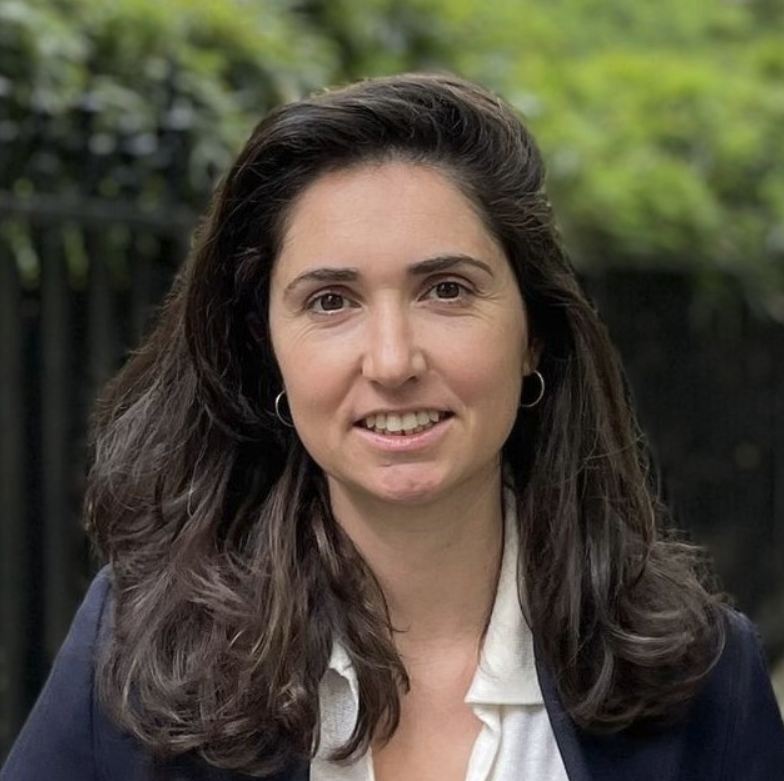
Ella Hamonic joined UNESCO in 2023 and now serves as Associate Programme Specialist in Learning Design and Innovation. In this role, she supports the development of the UNESCO-IIEP Global Campus, contributing to efforts to strengthen the capacity of Ministries of Education and policy leaders around the world. A graduate of Sciences Po Lille, she has over a decade of experience in online pedagogy, having worked with institutions such as UCLouvain, Institut Polytechnique de Paris, Dartmouth College, Universidad Carlos III de Madrid, and Coursera. Her research on online pedagogies has been presented at major international conferences, including MIT, Stanford, and UC San Diego, and in 2019, her team was awarded the edX Prize. She co-chaired the EMOOCs international conference on AI in Education in 2025. Beyond her work in digital learning, she has also contributed to public advocacy on consent and advised the French Ministry of Higher Education on preventing gender-based violence.
Radu Vasiu

Radu Vasiu is currently:
- professor at the Faculty of Electronics, Telecommunications and Information Technologies
- Director of the Multimedia Research Centre (2003 – present)
- Director of the Institute for Digital Transformation (2023 – present)
- Former President of the Politehnica University Senate (2016-2023)
- PhD supervisor in the field of Electronics, Telecommunications and Information Technologies
- President of IAFES – International Association for e-Science (2013 – present)
- Member of the IEEE Computer Society and IEEE Communications Society
- EDEN Fellow of the European Distance and E-learning Network (EDEN)
- Member of the European Universities Association (EUA) and of the EUA council for Doctoral Education
- Member of the International Association of Science and Technology Engineers for Development (IASTED)
- Member of the Commission for European Integration of the Romanian Academy, Timisoara branch
- Member of the Romanian Academy for Technical Sciences, section Electronics and Automation (since 2023)
His research interests are in the area of blockchain technologies, AR/VR technologies, open data, smart cities, mobile applications, e-learning, multimedia and web technologies, micro-credentials, Virtual Mobilities. Since 1993 he was involved in more than 45 international research and educational projects, both as coordinator or as contractor.
Radu’s publication list includes 12 books, 5 conference proceedings as editor, 21 book chapters and more than 200 papers published in journals or in conference proceedings.
He acted as invited professor in different universities from UK, Finland, France, Italy, Austria, Greece, Netherlands and USA.
In 2022 professor Vasiu received the “Traian Vuia” Award for Excellence in Research for Engineering Sciences at the Banat Excellence Gala, under the patronage of the Romanian Academy.Carmen Holotescu
Carmen Holotescu is a Professor and the Rector of "Ioan Slavici" University in Timișoara, also serving as the Director of the Center for Open Education and Blockchain. She holds a PhD specialized in emerging technologies and open education.
Since 2000, she has been a key contributor to more than 40 national and European projects, bringing extensive expertise to the design and implementation of learning platforms and programs in open pedagogies.
Her work encompasses high-impact research and strategic guidelines, complemented by the delivery of blended learning and training sessions that address transformative digital paradigms such as open education, MOOCs, blockchain, and AI integration.
Moreover, she has significantly contributed to the development of policy strategies and recommendations at institutional and national levels.
Professor Holotescu is the author of over 150 articles and book chapters, with a strong scholarly impact of over 2,900 citations.
Additionally, she is a certified online instructor at the University of Maryland Global Campus (formerly UMUC), USA, where she facilitated online courses for 12 years, bridging international digital teaching standards with European research.Mark Frydenberg
Mark Frydenberg is a Senior Lecturer at Bentley University, USA, a successful author of the Cengage Learning book series. Mark's professional interests include the use of technology in education. He is the Director of the CIS Learning and Technology Sandbox (http://cis.bentley.edu/sandbox) and is a frequent speaker at web 2.0 technology conferences.
Arnold Pears
Arnold Pears, BSc(Hons) PhD Latrobe University Australia, Honorary Doctor, University of Eastern Finland, is professor of engineering education and Head of the Department of Learning in Engineering Sciences at the KTH Royal Institute of Technology, Stockholm, Sweden. Professor Pears was previously professor and deputy head of the Department of Information Technology, Uppsala University Sweden, where he also served multiple terms of the Boards of Studies for Natural Sciences and Technology and the University Academic Senate. He is currently the President of the IEEE Education Society, an IEEE Senior Member, and 2025 recipient of the SEFI Leonardo Da Vinci Medal for outstanding international contributions to Engineering Education. During his career he has published widely in the computing sciences, computing education and engineering education, contributing over 100 articles and papers to international conferences and journals.
Thomas Staubitz
Thomas Staubitz is Professor of Educational Technology and Social Learning at the German University of Digital Science. He teaches several online courses on software development to students with diverse academic backgrounds and varying levels of prior experience. He holds a bachelor’s and a master’s degree in International Media and Computer Science, as well as a doctorate in Internet Technologies and Systems. His research focus is on the delivery of such courses in a scalable way. Before joining the German University of Digital Science in 2024, he served as a Senior Lecturer at the Hasso Plattner Institute’s openHPI MOOC platform for over a decade. In this role, he was involved in a broad range of projects in collaboration with industry and public-sector partners, including SAP and the World Health Organization, as well as in publicly funded national and European research initiatives. At openHPI, he taught several MOOCs on Java programming and contributed to the design and production of numerous additional courses in collaboration with faculty members and students. Within this context, he also completed his doctoral dissertation on the assessment of team-based, gradable assignments in large-scale learning environments.
Carlos Delgado Kloos
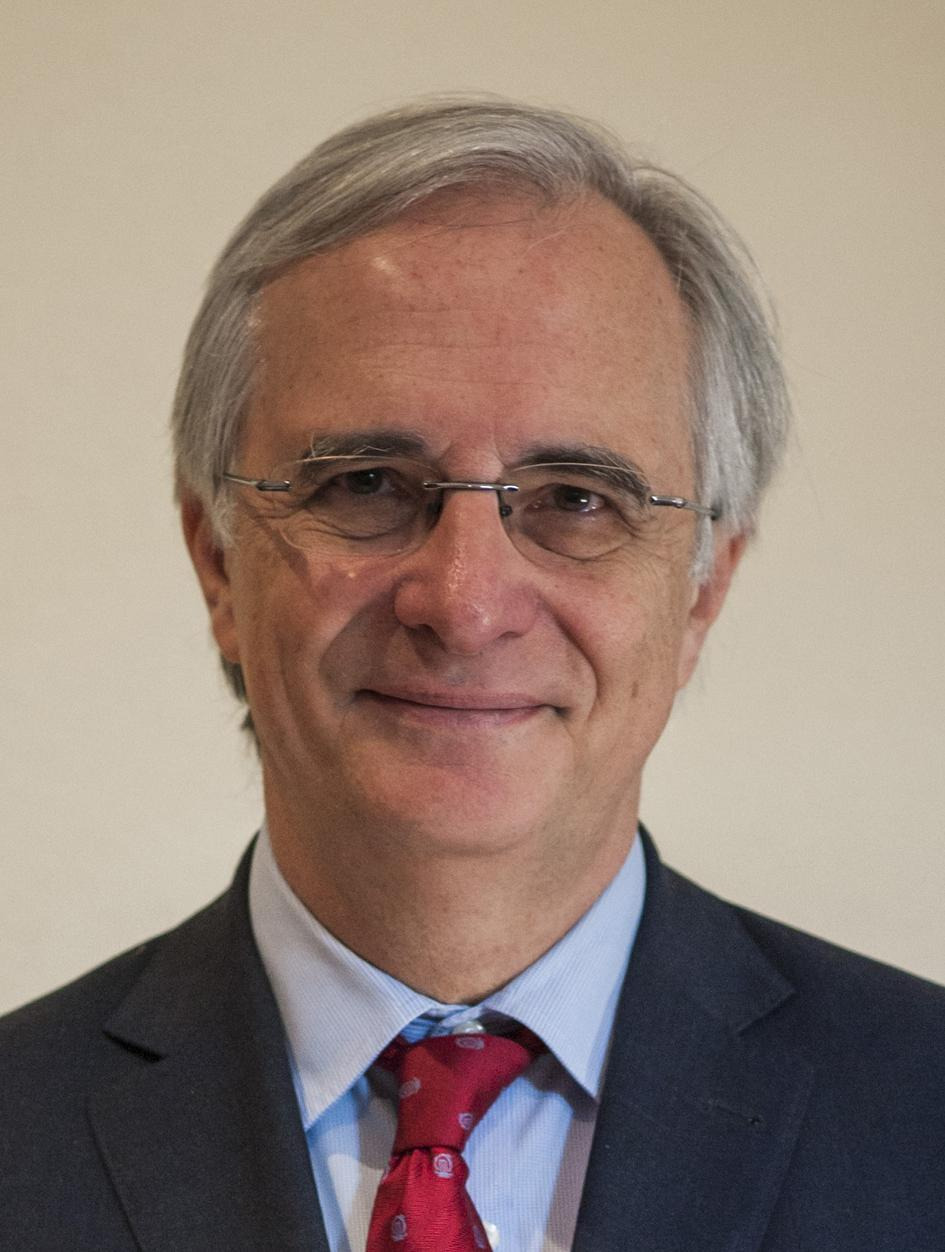
Dr. Carlos Delgado Kloos studied Telecommunications Engineering at the Technical University of Madrid and Computer Science at Technical University of Munich. He is Full Professor of Telematics Engineering at Universidad Carlos III de Madrid, where he is also Head of Department, Director of the GAST Research Group, and Director of the UNESCO Chair on “Scalable Digital Education for All”. Previously, he has been Rector’s Delegate for Digital Microcredentials, Vice Rector for Strategy and Digital Education, Vice Rector for Infrastructures and Environment, Associate Vice Rector for International Relations and Cooperation, and Founding Head of his Department. He has carried out research stays at several universities such as Harvard, MIT, Munich, Passau, and Naples.
His primary research interests lie in the field of Educational Technology. He has participated in numerous research projects and authored over 600 publications. He has worked recently on projects about MOOCs, Learning Analytics, Teacher Training, Microcredentials, and Artificial Intelligence. As the leader of the CertiDigital project (certidigital.es), he has been instrumental in advancing the adoption of digital micro-credentials within Spain, aligning with European frameworks. Additionally, he has coordinated several MOOCs on platforms like edX and MiríadaX, including one about Java Programming amassing approximately 700,000 registrations. Most recently, he has recorded a MOOC about AI for Teaching and Learning available on Federica Weblearning and Coursera.